
- 4E, No.3 Shenfeng Road, Liuyao Community, Henggang Street, Longgang District, Shenzhen,China
- cc.shen@xypltd.com
- Call: +86 15112667855
News
Why and how microcontrollers can help achieve the popularization of edge AI
- 2026-09-04
In the past few years, edge AI has become increasingly popular. It is expected that by 2035, the relevant global markets will grow at a compound annual growth rate of 27.8%, with a net worth of $356.84 billion.
This demand is the result of multiple factors driving it. Companies generally have security concerns about transmitting sensitive or proprietary information to the cloud, but edge processing can alleviate these concerns. Edge processing can also reduce latency, which may be crucial in real-time applications that require instant decision-making. Industrial Internet of Things (IIoT) devices provide data-driven operations, which in turn increases the use cases for edge AI. From portable medical devices to wearable devices and IIoT, rapidly expanding applications are driving the thriving development of the edge AI market.
With the increasing popularity of this technology, the market demand for components that can meet the data processing needs of embedded systems is also rising synchronously.
The choice of computational processing: microcontroller or microprocessor
Currently, the vast majority of IoT devices deployed in industrial and other embedded devices are low-power devices with very small memory. The processing capability of the device comes from a small embedded microcontroller (MCU). These MCUs adopt a low-power architecture, which makes embedded systems more cost-effective compared to systems using microprocessors.
Before the emergence of edge AI, MCUs had always been able to meet the processing needs of IoT devices well. But traditional MCUs often cannot provide the computing power required for more complex machine learning algorithms, which are a hallmark of edge AI applications. Such algorithms typically run on graphics processing units (GPUs) and microprocessors with more computing power. However, there are also some inherent drawbacks to using these components, including the issue of high power consumption. Microprocessors or GPUs are not the most energy-efficient solutions. Therefore, microprocessor driven edge computing may not be the best choice for all edge AI applications, while suppliers choose to rely on MCU.
Independent MCUs are cheaper than GPUs and microprocessors. In order to expand edge AI applications, it is increasingly necessary to enhance the computing performance of MCUs while leveraging their low-cost and low-power advantages.
In fact, over the years, some factors have converged to drive the continuous improvement of the functionality of edge MCUs.
Factors that contribute to the use of MCUs at the edge
Although it is widely believed that traditional MCUs are too lightweight for AI related data processing, the optimization of MCU design, coupled with a broader technological ecosystem transformation, is driving the application of MCUs in edge AI use cases.
These factors include:
Integrating AI accelerators in MCU: When MCU alone cannot meet the needs of edge computing, integrating it with AI/ML accelerators such as Neural Processing Unit (NPU) or Digital Signal Processor (DSP) can improve performance.
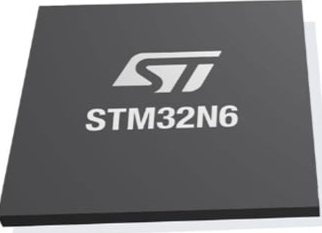
For example, STMicroelectronics' STM32N6 series CPU (Figure 1) is based on the Arm Cortex-M55 operating at a frequency of 800 MHz. Arm Helium vector processing technology brings DSP processing capabilities to standard CPUs. STM32N6 is the first STM32 MCU to embed the ST Neural ART accelerator, which is an internally developed NPU designed for powerful edge AI applications.
Picture of STMicroelectronics STM32N6 MCU for High Energy Efficiency Edge AI Applications
Figure 1: STM32N6 is the first STM32 MCU embedded with the ST Neural ART accelerator, which is an internally developed neural processing unit (NPU) designed specifically for energy-efficient edge AI applications. (Image source: STMicroelectronics)
AI models for edge optimization: Complex and heavy AI and machine learning algorithms cannot be simply transferred to MCUs. They need to be optimized for limited computing resources. The combination of compact AI architectures such as TinyML and MobileNet with optimization techniques has achieved this, even enabling edge MCUs to execute AI algorithms. STMicroelectronics has launched STM32Cube.AI, a software solution that converts neural networks into C code optimized for STM32 MCUs. Even with limitations in processing power and memory, using this solution in conjunction with STM32N6 can help ensure the performance required for edge AI applications.
The rise of AI ecosystems: having hardware components capable of performing AI related processing at the edge is far from enough. Executing AI algorithms at the edge requires a developer friendly ecosystem to help simplify the deployment of AI. Specific tools such as TensorFlow Lite for Microcontrollers can help provide such solutions. Open source communities such as Hugging Face and other platforms provide pre trained models and code repositories that developers can test and customize based on specific use cases. This AI ecosystem greatly reduces the threshold for technological applications and promotes the popularization of AI technology. Even for enterprises with limited resources that cannot independently develop proprietary AI models from scratch, they can smoothly access and utilize AI technology.
STMicroelectronics has a specially customized hardware and software ecosystem, ST Edge AI Suite, designed to optimize edge AI solutions. This suite integrates many AI libraries and tools from ST, making it easier for developers to find models, data sources, tools, and compilers that can generate code for microcontrollers.
The pre trained models in the model library provide a starting point for developers. These models use the Open Neural Network Exchange (ONNX) format, which is an open standard used to represent machine learning models in fields such as computer vision (CV), natural language processing (NLP), generative artificial intelligence (GenAI), and graphic machine learning.
Standardization and interoperability code: The AI ecosystem helps businesses test edge AI use cases, while open and standardized model formats facilitate seamless integration across hardware systems. The compatibility between cross software tools and MCUs helps reduce implementation barriers for edge AI.
Focus on edge security: Although MCUs eliminate or at least reduce the need for data cloud processing, hardware components provide an additional layer of security. They typically include features such as hardware encryption and secure boot, which can effectively protect data and AI models from malicious attackers.